
How Gleam Clean's Marketing System Works Together to Book More Work
A case study on how Gleam Clean's website, field work, and follow-up systems worked together to build trust, support real-world sales, and create new opportunities beyond the first service request.
- Client
- Gleam Clean
- Industry
- Exterior cleaning
- Market
- Houston area
- Website
- Visit site
For a local service business, the website is not just a digital brochure. It is often the moment a homeowner decides whether the person who knocked on their door, sent a text, or left an estimate is actually worth trusting.
That has been one clear lesson from working with Gleam Clean: often the various marketing pieces work together to produce work.
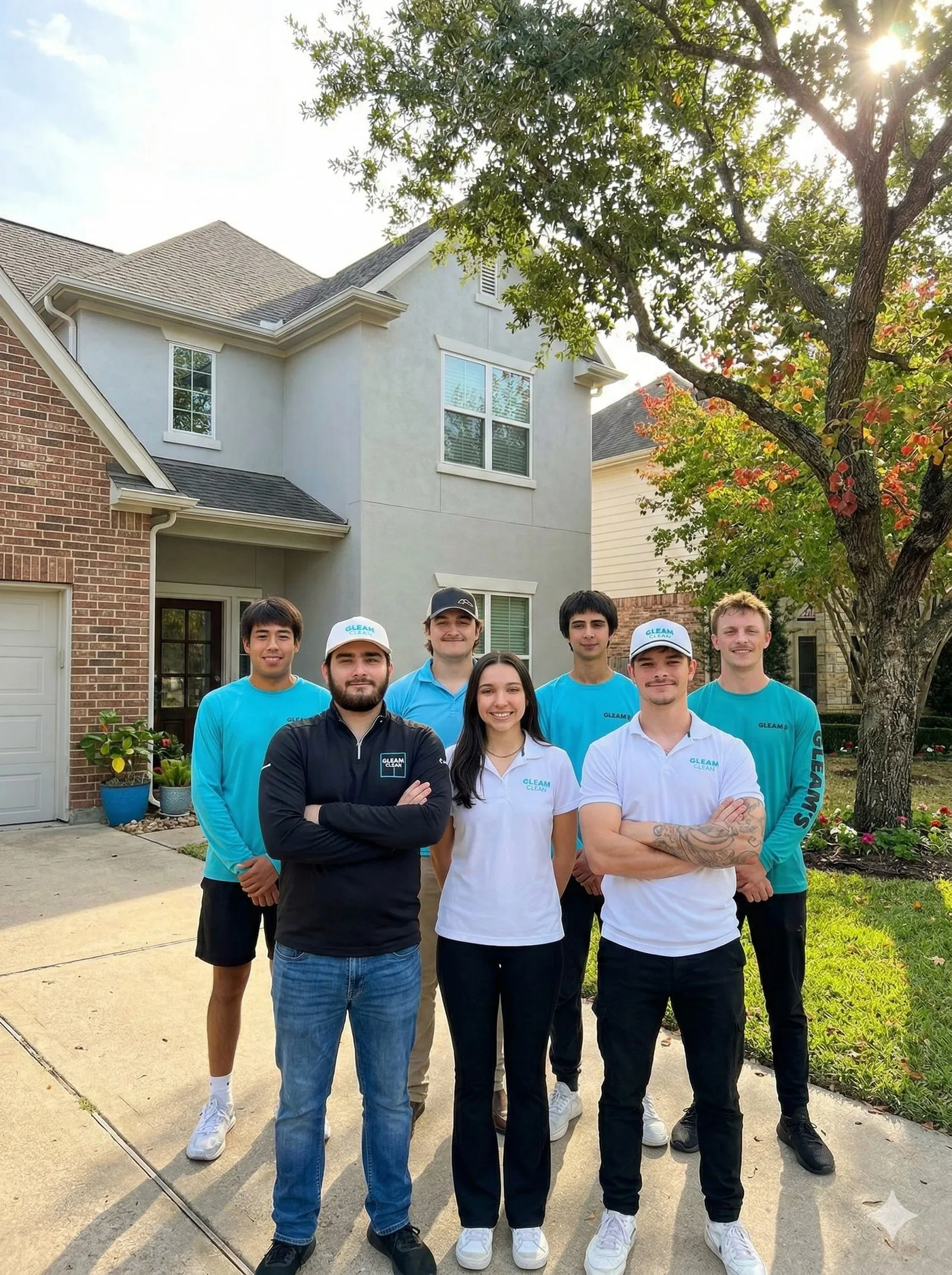
Gleam Clean is a Houston-area exterior cleaning company led by Luke Ramirez. Next Step Marketing built the company’s website and supports the CRM, follow-up system, and on-going SEO.
The work has changed over time, but the core idea has stayed the same: make the business look as legitimate online as it already is in the field.
The real-world problem: trust has to survive the gap
Luke is not only waiting for leads to come in. He and his salesmen have been willing to do the hard local-business work: door knocking, talking to homeowners, following up, and creating demand in the neighborhoods where Gleam Clean works.
That kind of effort creates opportunity, but it also creates a gap.
A homeowner might not book on the spot. They may listen politely, take a card, close the door, and then search the company later. In that moment, the website has to answer a quiet question:
Is this a real company I can trust at my house?
One of the clearest examples came from a homeowner Luke met while door knocking. They did not book on the spot. Later, they looked up Gleam Clean online, decided the company looked legitimate, used the call link on the website, and booked. The conversation grew from a one-time job into a maintenance plan.
That is the kind of conversion that is easy to miss in a marketing report. The website did not create the entire sale by itself. Luke’s field work started the conversation. The website gave the prospect an easy way to call when they were ready to act.
What the website needed to do
For Gleam Clean, the site needed to support several jobs at once:
- make the company feel established and professional,
- show the range of services clearly,
- create confidence after offline interactions,
- help prospects understand that Gleam Clean does more than basic window cleaning,
- and make it easy for interested homeowners to take the next step.
That meant the website had to do more than look clean. It had to reinforce the company’s positioning as a serious exterior cleaning provider.
Luke has described the finished site in the kind of language every web designer wants to hear, including calling it the “best website in Houston.” Compliments are nice, but the more important signal is what happened in real conversations: people used the website to validate the business before contacting Gleam Clean.
Being present in the neighborhood is its own lead source
Some of the best opportunities do not come from a planned campaign at all. They come from simply being visible while the work is happening.
We put a QR code on the Gleam Clean trailer. While the crew was working a job, a neighbor scanned that code, landed on the website, and that turned into new business.
Think about what had to line up for that to work. The parked trailer was advertising, the QR code turns that advertising into a click, and the website turns the click into a conversation.
DBR helps bridge the follow-up phase
Next Step Marketing has also helped Gleam Clean use CRM follow-up to turn past conversations and past customers into new opportunities.
A DBR campaign, short for database reactivation, is one of the simplest examples. Instead of only chasing brand-new leads, the business reaches back into its existing contact list with a timely, useful message. For a service company, that can mean checking in before a seasonal need, reminding past customers about a related service, or making it easy to request another quote.
For Gleam Clean, DBR works because the people receiving the message already have some relationship with the company. They are not cold strangers trying to verify whether Gleam Clean exists. They are past contacts or customers who may need a reminder, a seasonal reason to act, or a quick way to learn more about what the company can handle now.
One useful pattern showed up while we were running a text message campaign to reactivate past window-cleaning clients. A past contact came back into the conversation, saw that Gleam Clean also offered gutter cleaning, and asked for a quote.
The follow-up helped bring the opportunity back to Luke. The website helped the customer learn more about the company and discover a related service they already needed. The result was not just another window-cleaning conversation; it created an upsell opportunity.
Traffic sources and conversion tools have to work together
Here is the simplest way to think about it.
Every sale needs two kinds of tools, and they have to be working at the same time.
Traffic sources create attention and demand:
- door knocking,
- paid ads,
- a DBR campaign reaching back into the contact list,
- and simply being present in the neighborhood while the work gets done.
Conversion tools turn that attention into booked work:
- the website,
- the DBR message itself,
- the phone,
- and text follow-up.
A traffic source with no conversion tool is noise. People notice the business but have no easy, trustworthy way to act. A conversion tool with no traffic is like a sign in a dead end alley. No one cares.
Gleam Clean’s results came from running both sides at once and keeping them in sync. The door knock, the trailer, and the reactivation text put the company in front of people. The website, phone, and text thread gave those people a clean path to yes.
In competitive home services, that consistency compounds. The more professional the business looks at every touchpoint, the easier it is for a homeowner to say yes.
The takeaway
Gleam Clean is a good example of what a local service marketing system should look like.
The website should not sit off to the side waiting for random traffic. It should support everything the business is already doing: door knocking, referrals, reactivation, service expansion, and the sales conversations that turn interest into booked work. And every traffic source should point to a conversion tool that is ready to catch it.
In this case, the system worked together. The website helped homeowners decide Gleam Clean was legitimate. The trailer and its QR code turned a parked job into a new lead. The follow-up texts helped past customers discover additional services. And the phone, website, and text thread converted offline interest into booked work.
That is the real value of getting the whole system right.
Not just looking good.
Creating enough trust, in enough places, for the next conversation to happen.